


PRODUCTS
Empower your research with our multi-technology bioprinters, AI-driven software, and high-performance biomaterials designed to create complex, functional tissue constructs with clinical-grade precision.
Bioprinters
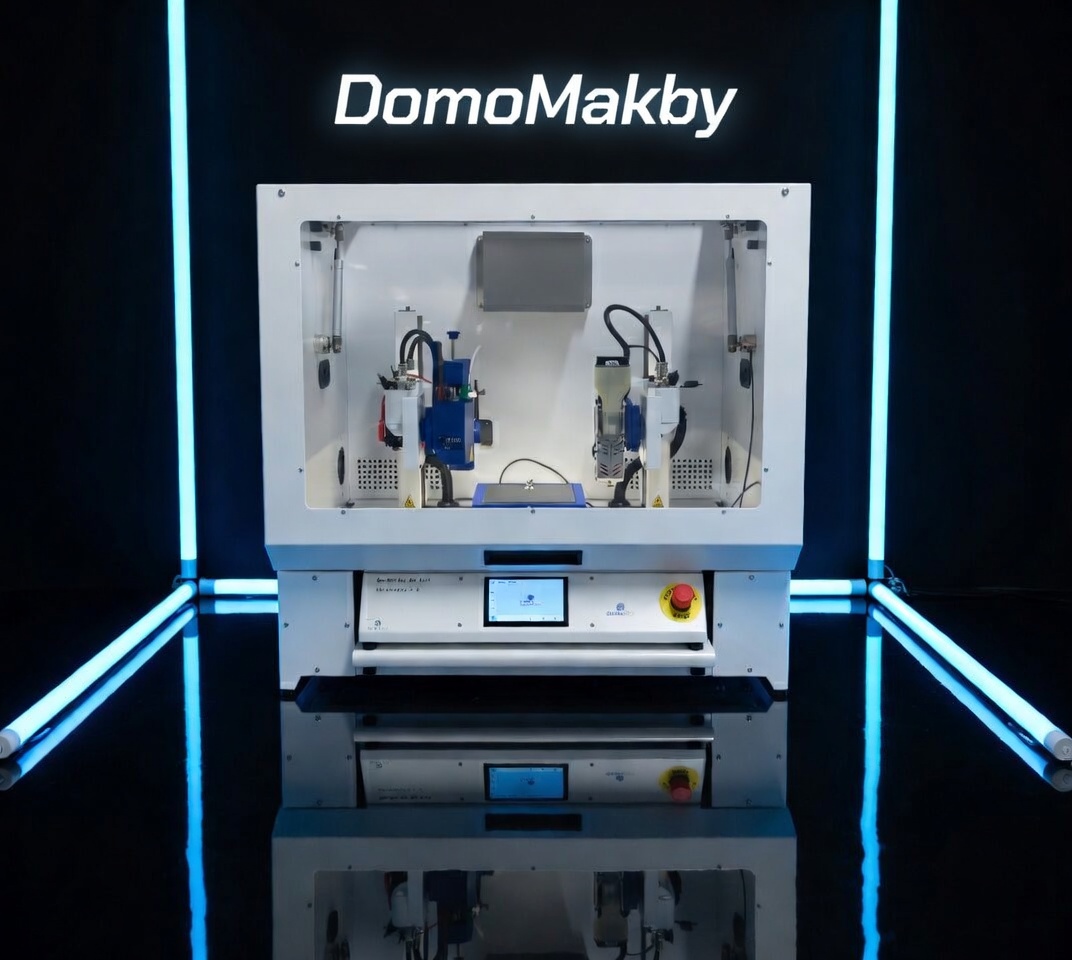
Multi-Technology 3D BioPrinter
The ultimate platform for complex, multi-material bioprinting and tissue engineering.
Versatile & Precise Fabrication
DomMakby supports up to four interchangeable printheads simultaneously, allowing you to combine different cell types, bioinks, or polymers in a single session. Whether you need FDM, Electrospinning, Melt Electrowriting (MEW), or UV printing, this platform enables virtually limitless possibilities for customized constructs.
Controlled Environment
- Sterility-Ready: Compact design that fits easily inside any sterile chamber for optimal experimental conditions.
- Climate Control: Dedicated chamber supporting temperatures up to 55°C and humidity levels between 30–75%.
- High Precision: Robust engineering ensures accurate control across the X, Y, and Z axes for extended, intensive testing.
Key Features
- Integrated Touchscreen: Configure protocols and manage STL or G-code files directly from an intuitive interface.
- Multi-Modal Compatibility: Work with specialized heads for pellets (FGF), filaments, or temperature-sensitive materials.
- Advanced Platforms: Choose from cooling/heating bases (5°C to 120°C) or high-speed drum collector
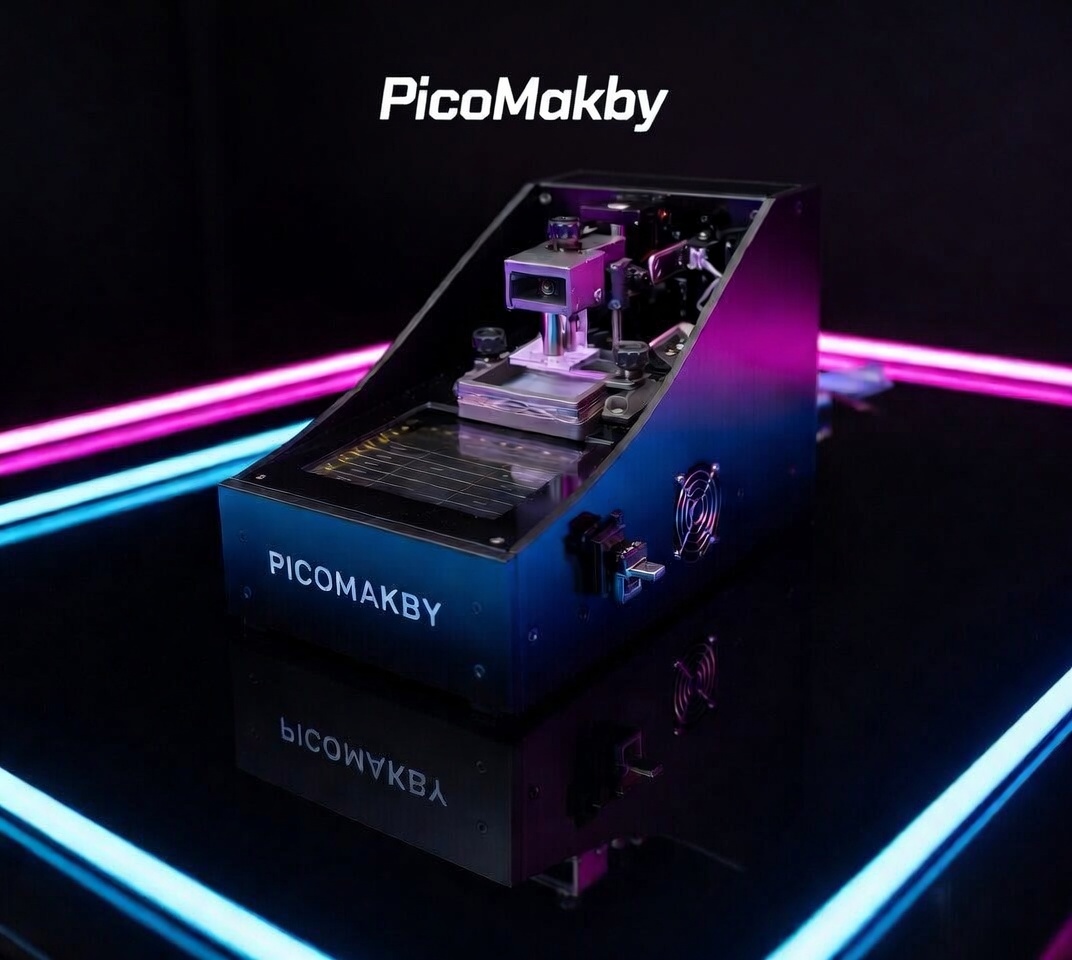
DLP Portable Bioprinter
Compact, user-friendly, and cost-effective DLP printer designed to meet the needs of any laboratory.
Precision at Microscale
The PicoMakby is the ideal platform for universities and research laboratories specializing in advanced materials and bioprinting. It enables precise testing of small volumes of high-value resins before scaling to full-size production. With accurate control over microarchitecture, it supports the development of advanced microfluidic constructs.
Technical Excellence
- High Resolution: The current resolution is 35 µm on XY, so 700×700 pixels on a 24×24 mm area.
- Rapid Curing: Equipped with a monochromatic 4K LCD for high-speed curing times.
- Customizable Vat: Flexible printing volumes with vats ranging from 25×25 mm down to 15×15 mm
- Z-Axis Control: Supports minimum and maximum layer thicknesses of 33µm / 50µm / 100µm per layer (Z resolution)
Versatile Operation
- Irradiation Control: Precise intensity range of $3text{mW/cm}^2$ for each irradiation layer.
- File Compatibility: Supports multiple formats, including STL and image files.
- Robust Engineering: Designed for reliable performance in a portable format.
AI-Powered Software
As the demand for sophisticated 3D constructs grows, our software uses AI computational geometry optimization to minimize trajectory overlap and optimize printing patterns. This ensures that even the most complex scaffolds closely replicate native tissue features.
Intelligent Path Planning
- Multi-Material Integration: Easily define intricate pathways by combining different printheads within the same layer.
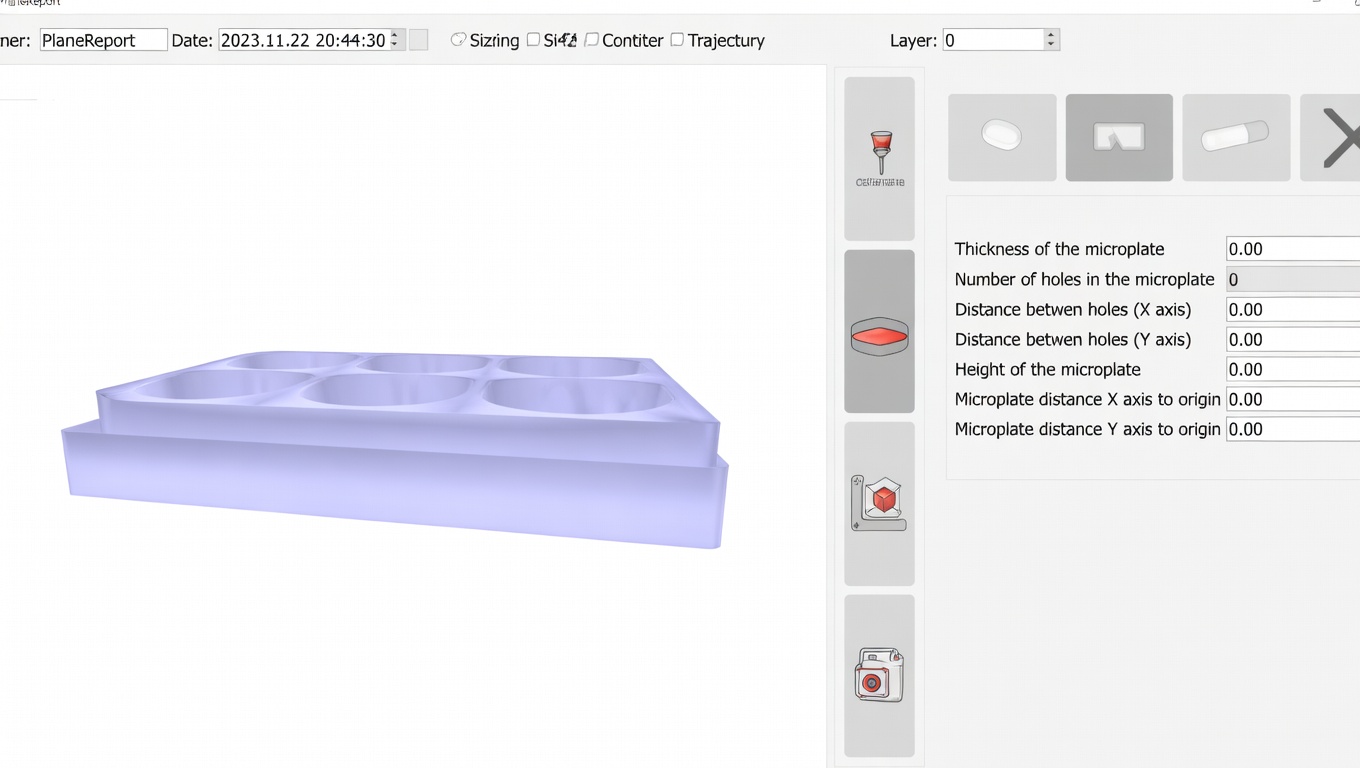
- Shape Generator: Create 3D models like boxes, cylinders, or hemispheres directly in the software without needing external CAD programs.
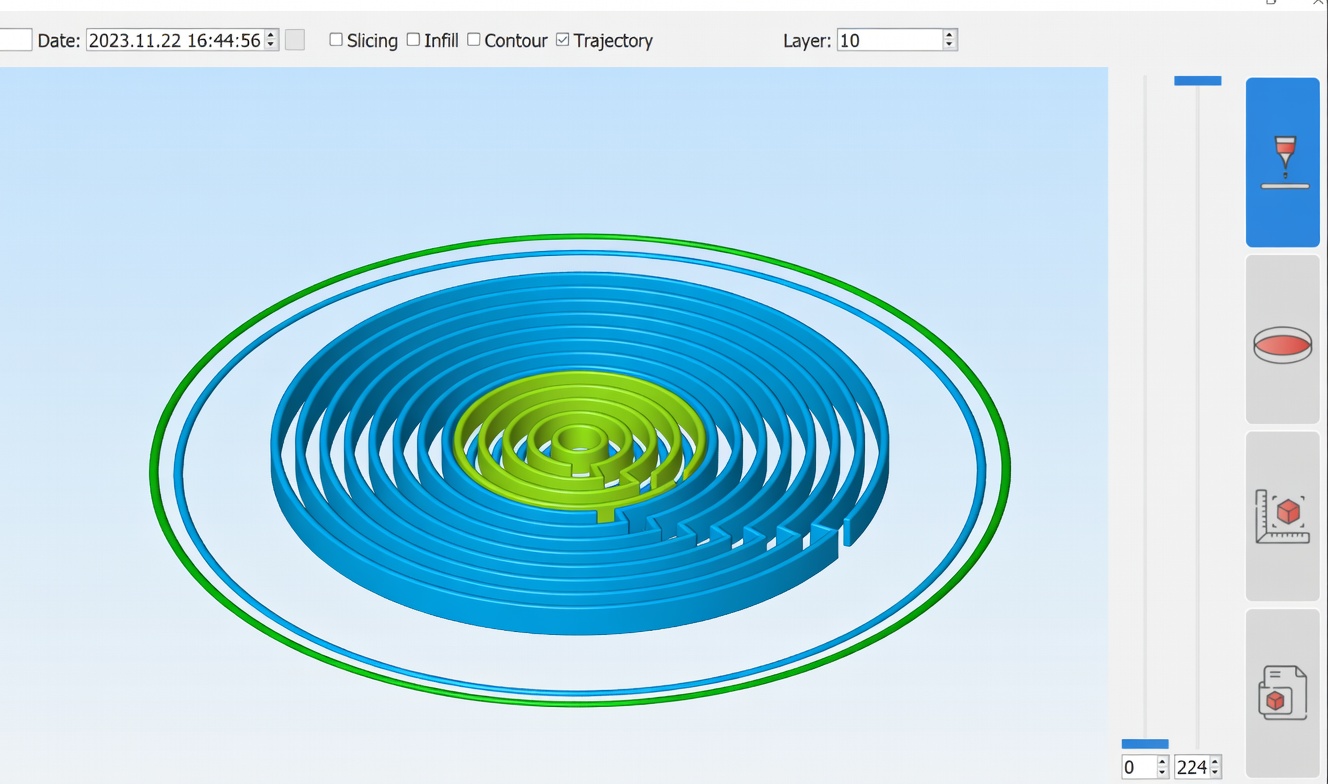
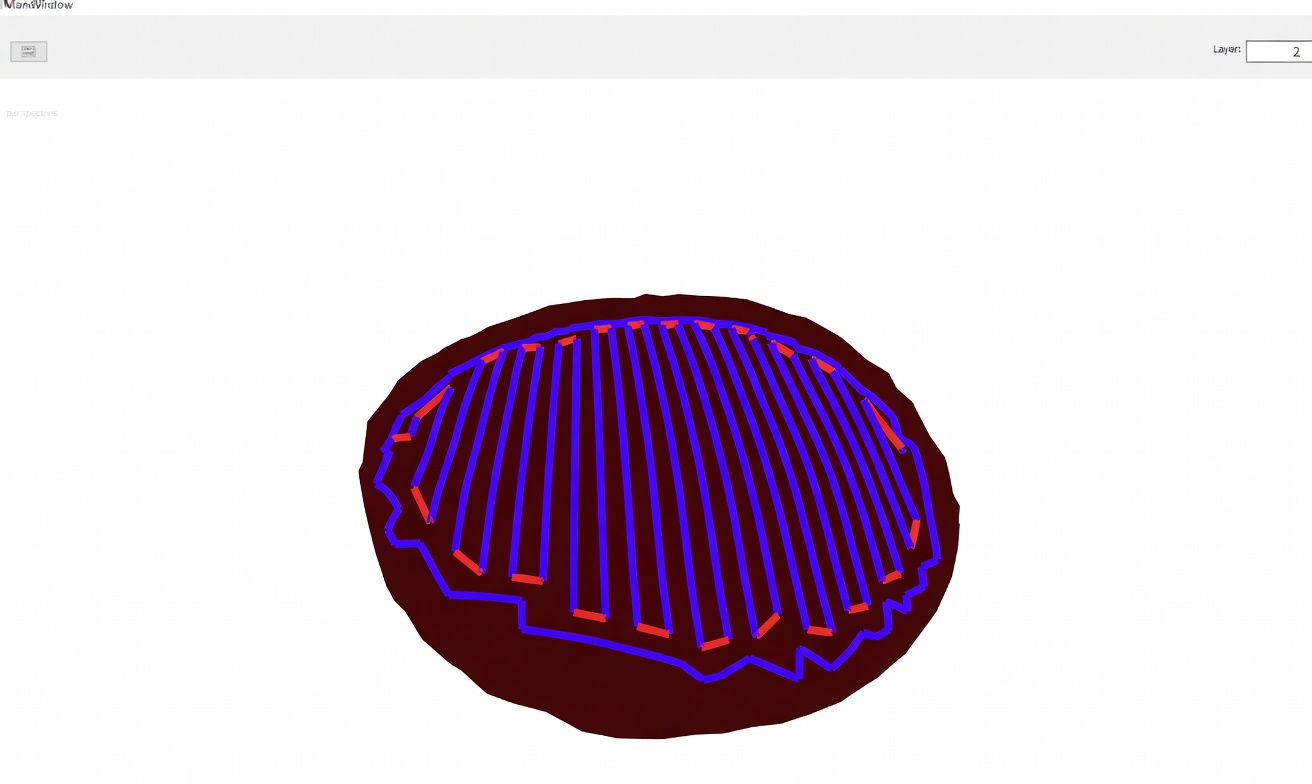
- Non-Planar Distribution: Generate trajectories with non-planar layers to improve surface finish and simulate prototypes for optimal stiffness and porosity.
Seamless Workflow & Control
- User-Friendly Interface: Combines CAD and CAM functionalities in one place, requiring no programming knowledge.
- G-Code Management: Develop G-Code directly from STL files or edit it manually with the integrated editor and tool-path visualizer.
- Remote Monitoring: Includes an integrated webcam to optimize the AI experience and monitor prints in real-time.
- Universal Compatibility: Designed to work with any extrusion bioprinter.
Biomaterials
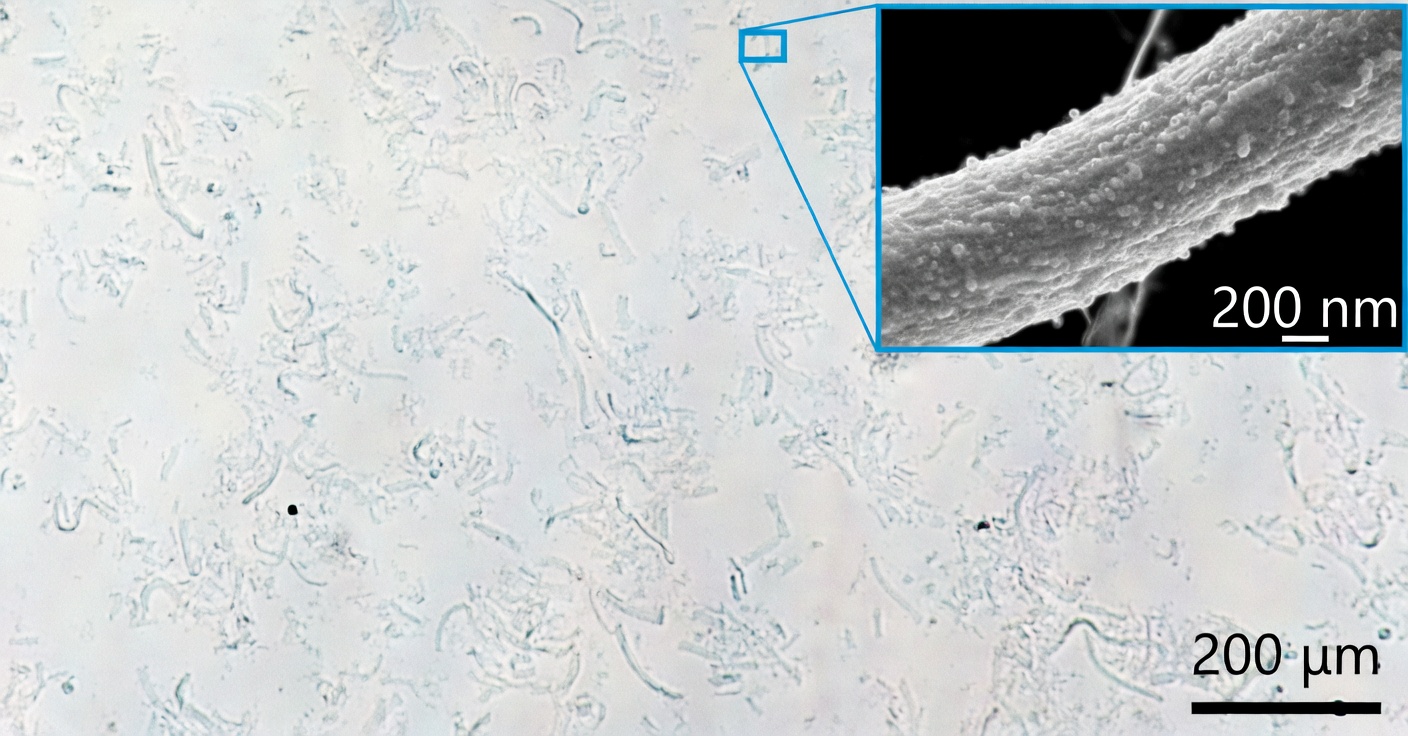
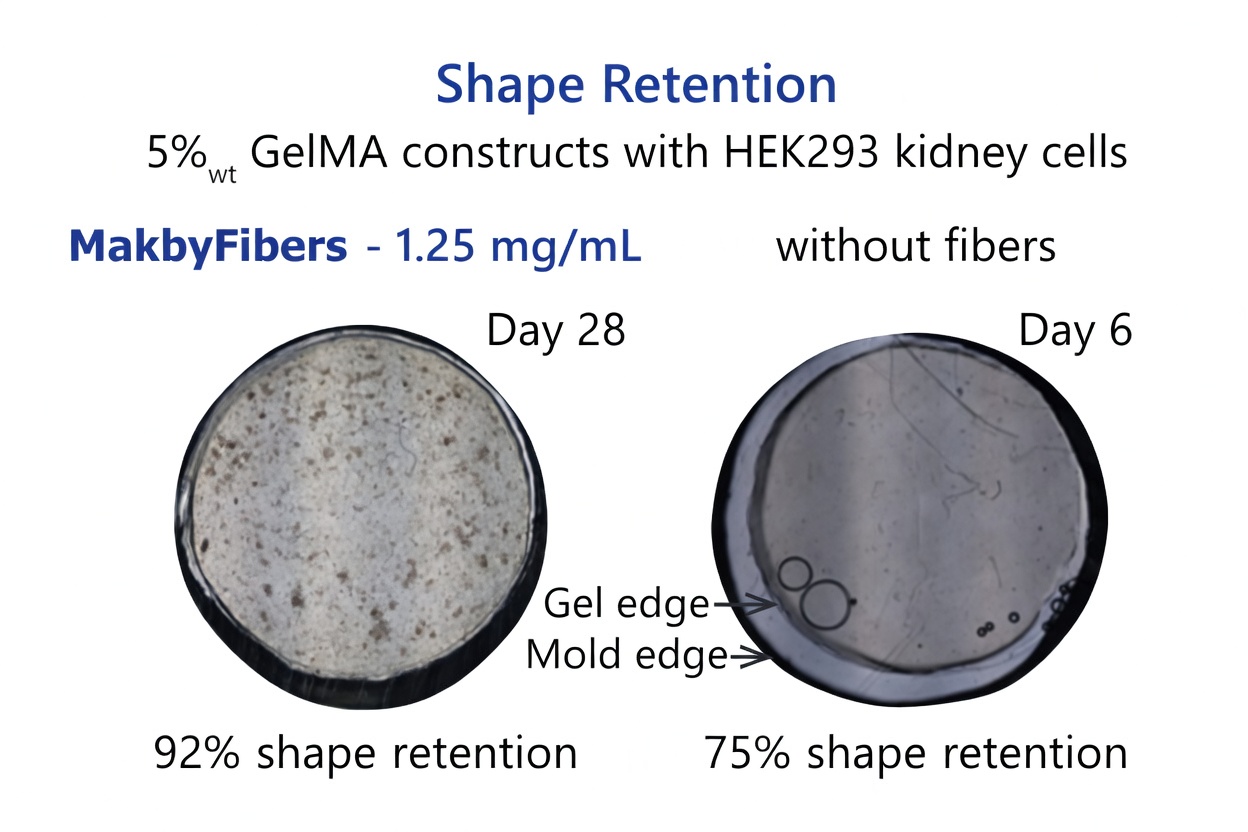
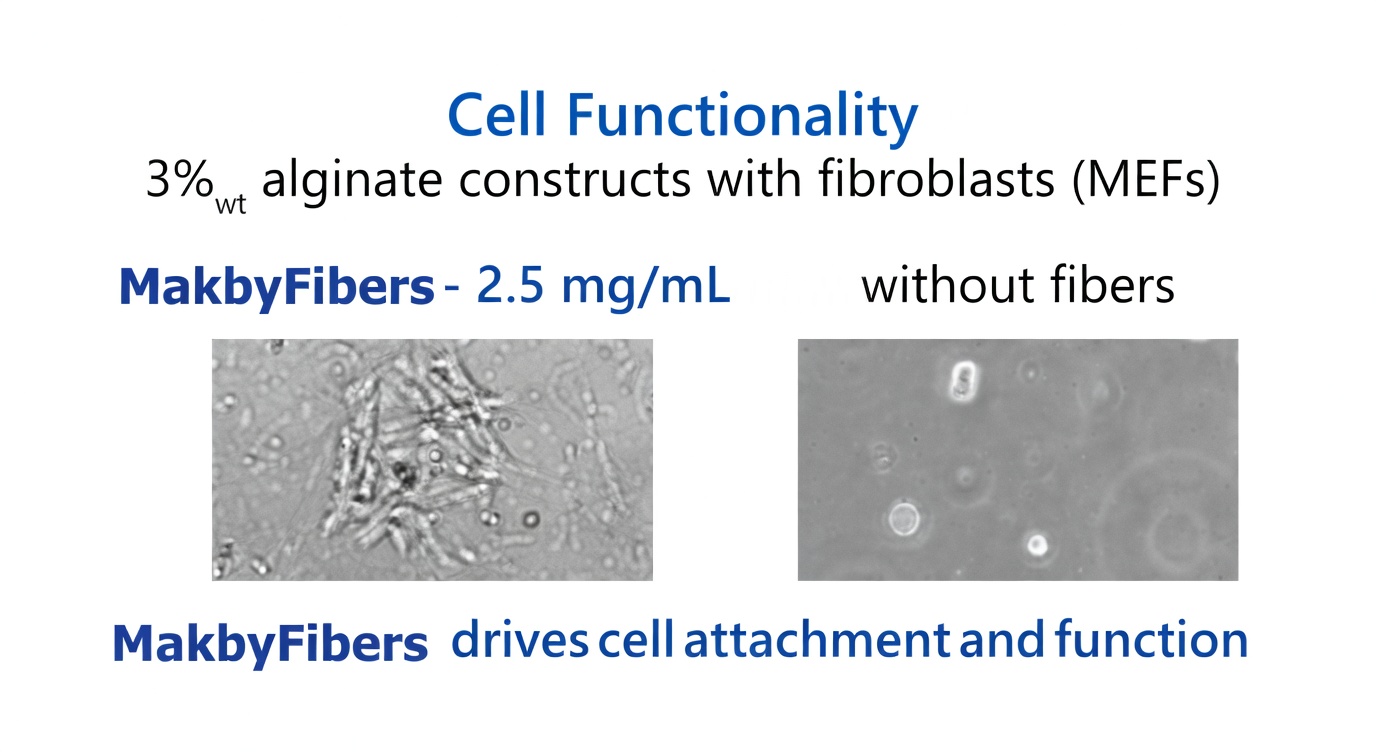
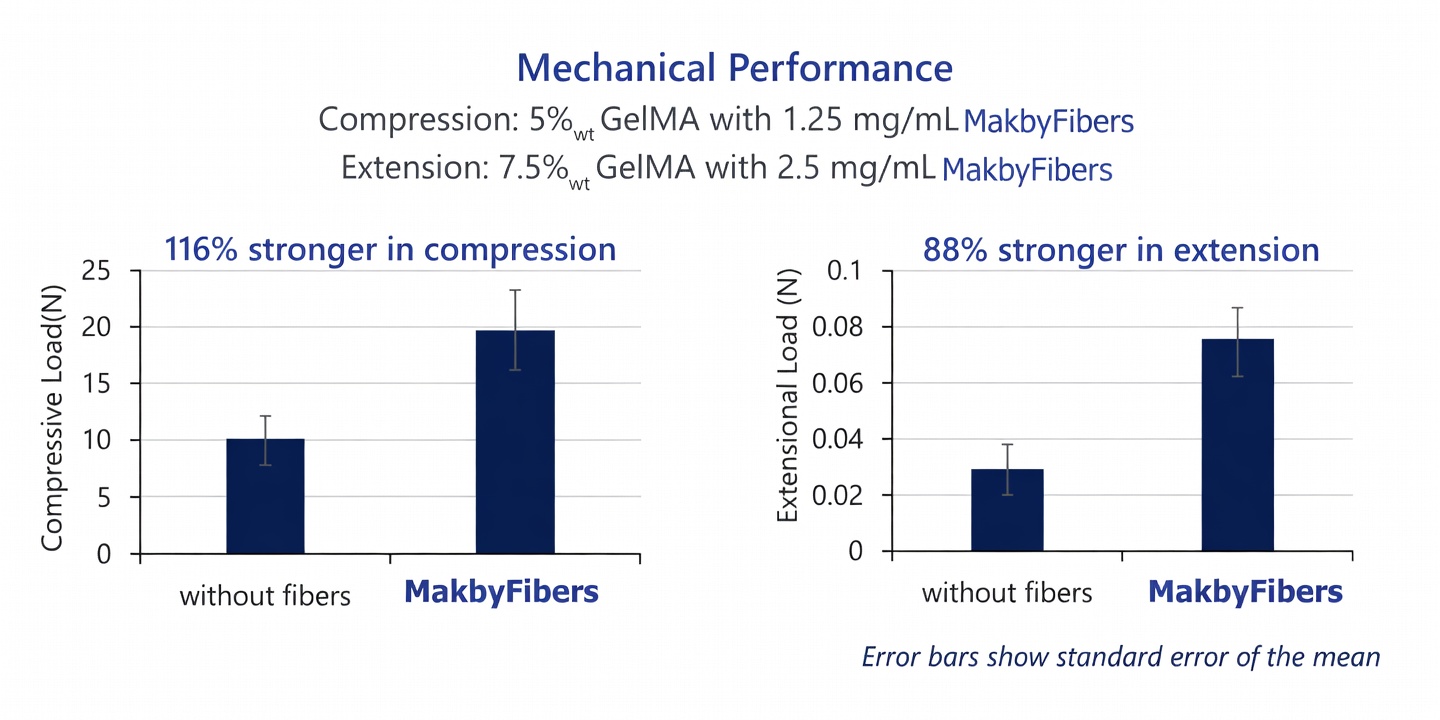
To reach clinical impact, bioprinted constructs must combine mechanical strength with biological relevance through precision-engineered solutions. MakbyFibers are GMP-grade Type I collagen fibers, measuring 50 μm in length, designed to reinforce printed structures and improve shape fidelity without altering bioink viscosity or printability. These fibers closely mimic native collagen architecture and provide physiologically relevant attachment sites to support cell adhesion and function while maintaining structural durability for at least 28 days in cellular constructs.
Advanced biomaterials for bioink structural reinforcement
- The fibers are easily resuspended in any aqueous solution, including acidic conditions with a pH of 2 or higher, and they align with printhead flow to minimize clogging during extrusion. Each fiber has a diameter of 1–2 μm and a length of 44 ± 13 μm, exhibiting a hydrated Young’s Modulus of 50 ± 16 kPa.
- They remain stable in solution for over three months at pH 2–7.4 and can withstand temperatures up to 60°C.
- For long-term performance, the fibers should be stored at -20°C, though they remain stable at 4°C for short-term use, and they are specifically designed to be degraded by Collagenase I/IV.